
+92306 3026 466
How to Pass Your NSW Driving Test First Time: Instructor’s Honest Tips
Book Your Lesson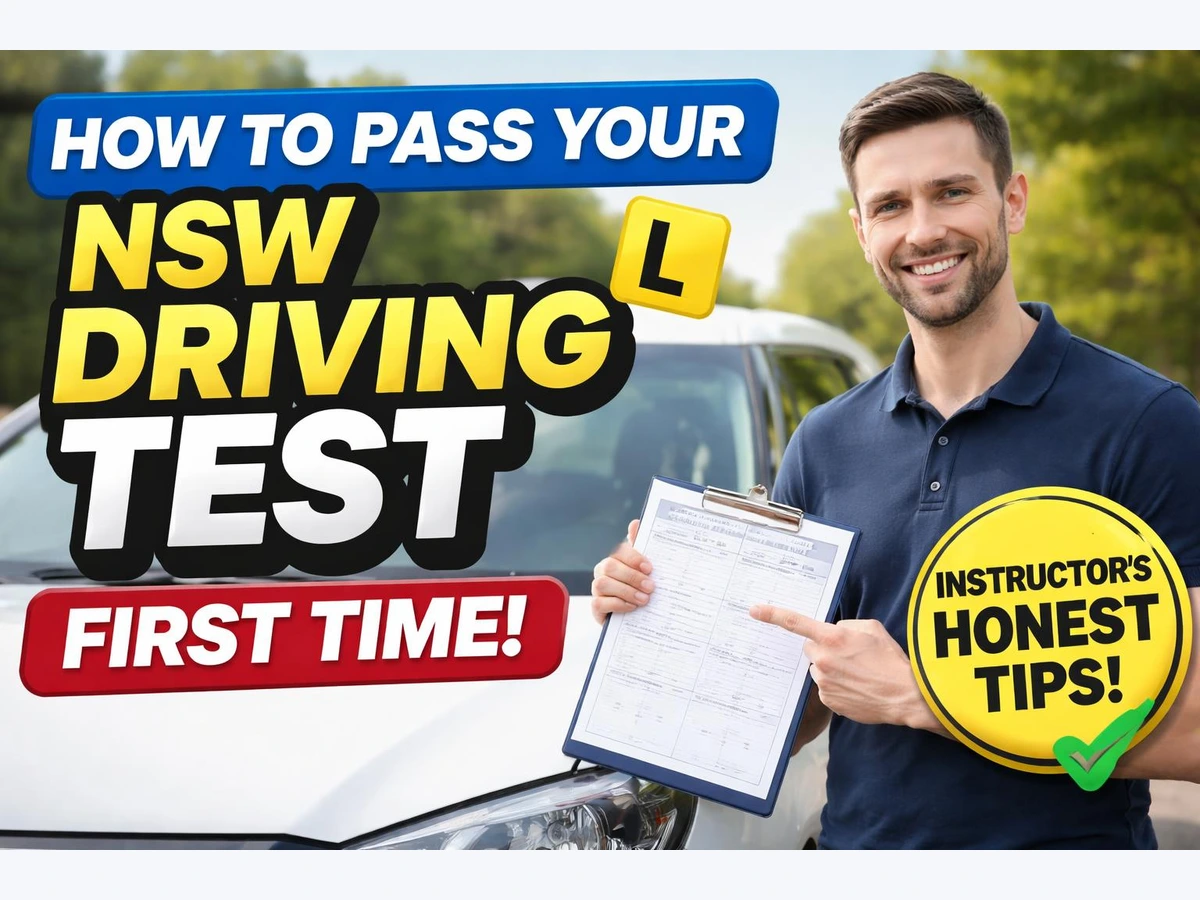
To pass the driving test in NSW first time, you need three things: real road experience (120 logged hours if you’re under 25), consistent safe habits like obvious head checks and full stops, and a calm head on the day. Most learners who fail aren’t bad drivers. They’re drivers who haven’t yet turned good habits into automatic ones. The tips below are what an experienced instructor would tell you if you were sitting in the passenger seat.
Let’s be honest for a second. Nobody wakes up on test day feeling completely relaxed. But the learners who pass first go usually aren’t the naturally gifted ones. They’re the ones who prepared for what the examiner actually looks for, not just for “driving well”.
Here’s how to be one of them.
Are You Actually Ready to Take the NSW Driving Test?
If you’re under 25, you can take the driving test once you’ve held your learner licence for 12 months, logged 120 supervised hours (including 20 at night), and passed the Hazard Perception Test. Learners 25 and over can book whenever they feel ready.
Being eligible and being ready are two different things. Service NSW sets the minimum requirements, but it also says something worth remembering: you can keep practicing on your learner licence for as long as you need, and you should only sit the test when you feel confident driving safely without a supervisor.
Here’s the eligibility side, so you know where you stand:
- Learner licence held for 12 months (if you’re under 25)
- 120 hours of supervised driving, including at least 20 hours at night
- Hazard Perception Test passed (you can sit this after 10 months on your Ls)
- Digital logbook submitted at least 48 hours before your test, if you use the app
And here’s a simple gut-check for the readiness side:
- Can you drive a full 30 minutes without your supervisor giving any instructions?
- Do you check your blind spot every single time, even when the road looks empty?
- Can you stay calm when something unexpected happens, like a car cutting in?
If you answered “not yet” to any of those, that’s useful information. It’s cheaper to book another lesson than another test.
10 Honest Tips to Pass Your NSW Driving Test
The most effective tips for the driving test in NSW are practicing near your test centre, making head checks obvious, coming to full stops, matching the speed limit, and staying calm after small mistakes.
Here’s the quick list first. The detail is below.
- Practice on the roads around your test centre
- Make your head checks obvious
- Stop fully at stop signs
- Know your speed limits, especially school zones
- Drive at the limit, not far under it
- Check your mirrors on a rhythm
- Indicate early and clearly
- Ask if you didn’t hear an instruction
- Stay calm after a mistake
- Book by readiness, not by the calendar
1. Practice on the Roads Around Your Test Centre
You don’t need to know the exact route (nobody does), but you should know the area. Tricky roundabouts, school zones, and merging lanes near the centre are all fair game. Driving them a few times before test day takes away the “I’ve never seen this intersection” panic.
2. Make Your Head Checks Obvious
Examiners can’t see your eyes. They can see your head. A glance in the mirror won’t count as a blind spot check, so turn your head properly before changing lanes, merging, or pulling away from the kerb. It should feel slightly exaggerated. That’s the point.
3. Stop Fully at Stop Signs
“Nearly stopped” isn’t stopped. Bring the car to a complete standstill behind the line, pause for a moment, then go. It costs you two seconds and removes any doubt.
4. Know Your Speed Limits, Especially School Zones
Speed limits change quickly in built-up areas, and school zones drop to 40km/h during their active hours. Read every sign as you pass it. If you’re unsure of the limit, that’s a sign to slow down and look, not to guess.
5. Drive at the Limit, Not Far Under It
Nervous learners often crawl. It feels safer, but sitting well under the limit without a reason can hold up traffic and suggest a lack of confidence. Aim to sit right at the limit when conditions allow.
6. Check Your Mirrors on a Rhythm
Don’t only check when you’re about to do something. Build a steady scan: mirror, road ahead, mirror, road ahead. When it’s a habit, you stop having to think about it, and that’s exactly what you want under pressure.
7. Indicate Early and Clearly
Signal well before your turn or lane change, not as you’re already doing it. And check afterwards that it’s switched off. Your indicator is how you tell everyone around you what you’re about to do, including the examiner.
8. Ask If You Didn’t Hear an Instruction
If you missed what the examiner said, just ask them to repeat it. It’s far better than guessing and taking a wrong turn. Examiners would rather clarify than watch you make an unsafe decision.
9. Stay Calm After a Mistake
One small error rarely fails you on its own. What hurts is the spiral: you make a mistake, panic, and make three more. If something goes wrong, take a breath, reset, and focus on the next hundred metres.
10. Book by Readiness, Not by the Calendar
It’s tempting to book the day you become eligible. Resist that if you’re still making the same mistakes in lessons. Booking when you’re genuinely ready is the single biggest thing you can do to pass first time.
What Do NSW Driving Test Examiners Actually Look For?
Examiners assess whether you can drive safely and independently, focusing on observation, speed management, positioning, decision-making, vehicle control, and how you respond to hazards.
The test isn’t looking for perfection. It’s looking for evidence that you can be trusted on the road alone. In practice, that comes down to a handful of things:
- Observation: Head checks, mirror use, scanning ahead
- Speed management: Matching the limit and the conditions
- Positioning: Staying in the right part of the lane and choosing the correct lane at intersections and roundabouts
- Decision-making: Judging gaps and giving way correctly
- Vehicle control: Smooth steering, braking, and acceleration
- Hazard response: Spotting and reacting to things before they become problems
If you’d like the full picture of where learners lose marks, our guide to the top 10 reasons learners fail their driving test in NSW walks through each one.
How Many Lessons Do You Need Before the Test?
There’s no magic number, but most learners benefit from a mix of professional lessons and plenty of supervised practice, and professional lessons can earn bonus hours in your logbook.
Everyone starts from a different place, so the honest answer is “it depends”. What matters more than the number is what you do with those hours. Ten focused lessons where you work on specific weaknesses beat twenty where you just drive around.
Structured lessons with a licensed NSW instructor also let you record bonus hours in your logbook, which helps you reach your 120 hours more efficiently. If you want a proper breakdown, we’ve covered it in our guide on how many hours of driving lessons you need before your test.
The Night Before and the Morning of Your Test
The night before, sort your documents and check your car. On the morning, eat something, arrive early, and do a short warm-up drive so you’re not starting cold.
A calm test day starts the evening before. Run through this list:
- Documents ready: Learner licence, booking confirmation, and logbook (or confirmation your app was submitted)
- Car checked: Registration, lights, mirrors, tyres, and L-plates on the front and back
- Digital logbook submitted at least 48 hours ahead, if you’re using the app
- An early night tired drivers miss things
One thing many learners don’t know: safety systems like autonomous emergency braking and traction control must stay switched on during the test, so don’t turn anything off.
For the full list of documents and car requirements, see our NSW driving test checklist.
On the morning itself, a short warm-up drive makes a real difference. It gets your hands and eyes working before the test starts, rather than during it.
What If You Don’t Pass?
Failing your NSW driving test isn’t the end of the road. You can book another test, and the feedback you receive shows exactly what to work on.
It’s disappointing, but it’s also common, and it’s fixable. Ask what went wrong, work on those specific things in your next lessons, and book again when you’re confident. Plenty of drivers who fail once go on to pass the second time comfortably, precisely because they now know what to focus on.
Get Help From an Experienced Instructor
A professional instructor can spot habits you can’t see yourself and help you fix them before test day.
Many of the mistakes covered here are almost impossible to notice on your own. You can’t see your own head checks, and you don’t hear yourself rolling through a stop. That’s what a second pair of eyes is for. Licence Help’s instructor has over 32 years of experience teaching learners across Sydney and knows exactly what NSW examiners are looking for.
Book your driving lesson with Licence Help today and walk into your test knowing you’re ready.
Related Topics
Ready to Pass Your Test? Book Your First Lesson Today
Ready to Pass Your Test? Book Your First Lesson Today
Your Road to Safe Driving Start Here
Thousands of Melbourne learners have trusted Licence Pass to help them pass their test and become safe, independent drivers. Here’s what sets us apart.
Frequently Asked Questions
Got questions before you book your first lesson? Here’s what Sydney learners ask us most.
Can I retake the NSW driving test if I fail?
Yes. You can book your test again once you feel ready. The feedback from your first attempt shows exactly which driving skills and road rules to work on before you take the test again.
Can I turn off safety features like AEB during my driving test?
No. Safety systems such as autonomous emergency braking and traction control must stay on for the driving test. Drive the way you normally would, with these features active, so you can demonstrate responsible driving.
What is the most common reason for failing the NSW driving test?
Missing head checks (blind spot checks) is widely reported as the most common reason. Testing officers also see mistakes with mirror use and speed control, so practise regularly until these checks become automatic.
Do I need to pass the Hazard Perception Test before the driving test?
Yes. You must pass the Hazard Perception Test before you can take the practical on-road test. Completing it first lets you focus fully on your driving skills and road safety when test day arrives.
How many hours do I need to log before the driving test in NSW?
Learners under 25 must record at least 120 hours of supervised driving in their logbook, including 20 hours at night. Your supervising driver helps you build the driving experience you need behind the wheel.
Tips & Advice for Sydney Learner Drivers
Practical advice from certified instructors to help you prepare for lessons, get test-ready and become a safer, more confident driver on Sydney roads.
How the 120-Hour Logbook Works in NSW
If you are a learner driver in NSW, the 120-hour logbook is probably the biggest…
How Many Lessons Do I Need to Pass a Manual Driving Test?
Most learners ask us the same thing before they book their first lesson: how many…
How Many Mistakes Are Allowed in the NSW Driving Test? (2026 Learner Driver Guide)
Every learner driver asks the same question before the big day: how many mistakes can…