
+92306 3026 466
How to Start a Manual Car: Step-by-Step Guide, Push-Start Tips
Book Your Lesson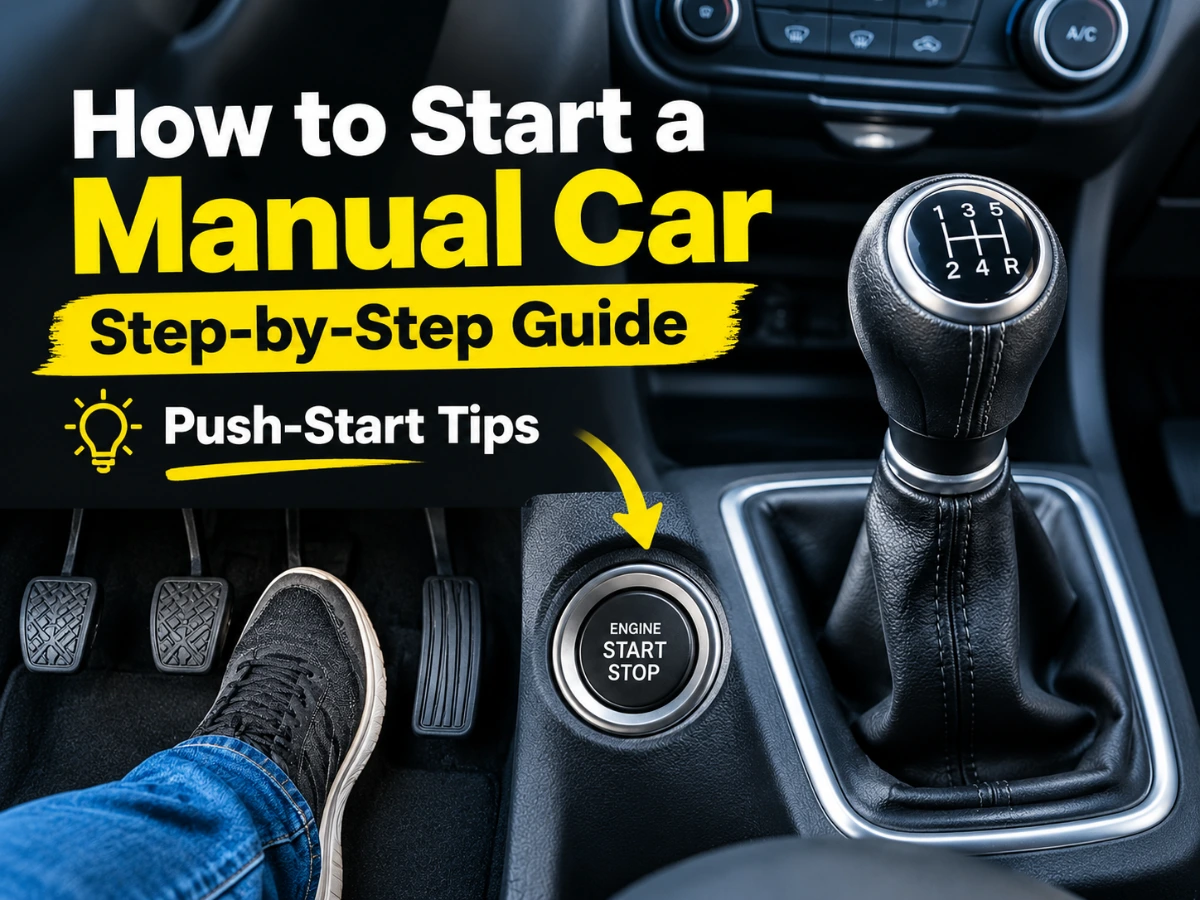
Starting a manual car feels hard at first. You have three pedals, a gear stick, and a lot of new things to remember. The good news is that the steps are simple once you learn them in the right order.
We wrote this guide for every beginner who wants to learn how to start a manual car without stalling or panicking. We cover the normal way to start the engine, how to move off, what to do on a hill, and how bump starting works when the battery goes flat. If you want to practise with an instructor beside you, our manual driving lessons at Licence Help are a good place to begin.
What Is a Manual Car and How Is It Different?
A manual car has a manual transmission. That means you choose the gear yourself, using the gear stick and the clutch pedal. An automatic car does this work for you.
In a manual car, you control three pedals with your feet:
- Clutch: the pedal on the left, pressed with your left foot
- Brake: the middle pedal
- Accelerator: the pedal on the right
The clutch connects and disconnects the engine from the wheels. When you press the clutch pedal down, the engine spins freely, and the car does not move. When you release the clutch, the engine drives the wheels. Learning to control that moment is the main skill in driving a manual.
Many learners ask whether they should start with manual or auto. We cover that in our guide on manual vs automatic and which to learn first in Sydney.
Before You Start the Engine: Get Ready
Good habits start before you turn the key. Take one minute to do these things each time.
- Adjust your seat: You should reach all three pedals easily, especially the clutch pedal with your left foot.
- Set your mirrors and fasten your seatbelt: Safety comes first, even in a car park.
- Check the handbrake: Make sure the handbrake (also called the parking brake) is on.
- Check the gear stick: Move the stick left and right. If it moves freely, the car is in neutral.
- Press the clutch pedal to the floor: This protects the starter and the engine.
Many newer cars will not start unless you press the clutch. This is a safety design that stops the car from lurching forward when you turn the key. Toyota and many other brands use it. If your car refuses to start, check your foot position on the clutch first.
How to Start a Manual Car: Step by Step
Here are the steps we teach every beginner. Follow them in order, and the process becomes easy.
Step 1: Press the Clutch All the Way Down
Push the clutch pedal to the floor with your left foot. Keep it there until the engine is running.
Step 2: Put the Gear Stick in Neutral
Check that the stick sits in neutral. It should wiggle left and right with no resistance.
Step 3: Turn the Key
Turn the key in the ignition or press the start button if your car has one. Listen to the starter and the motor. As soon as the engine fires, let go of the key. Do not hold it for long, because that can wear the starter.
Step 4: Check the Dashboard
Look at your dashboard. Warning lights should go out within a few seconds. If a light stays on, ask a mechanic to check the car before you drive far.
Step 5: Move Into First Gear
With your foot still on the clutch, move the gear stick into first gear. First gear is usually at the top left of the gear pattern, though you should check the diagram on your gear knob.
Step 6: Find the Biting Point
Slowly lift your left foot until you feel the engine note drop a little and the car begin to pull. This is the biting point. Hold your foot still here.
Step 7: Release the Handbrake and Add Gas
Release the handbrake. Then press the accelerator gently with your right foot. As the car begins to roll forward, keep lifting the clutch slowly until it is all the way up.
Step 8: Change Gear When the Time Is Right
After a few seconds of gentle driving, press the clutch, shift into second gear, and release the clutch smoothly. Keep your eyes up and your hands steady on the steering wheel.
Why Do Manual Cars Stall, and How Do You Avoid It?
Every learner stalls a manual car. It is normal. A stall happens when you release the clutch too fast or give the engine too little gas. The engine cuts out because it cannot carry the load.
If you stall, stay calm. Do this:
- Press the clutch and the brake.
- Put the gear stick back to neutral.
- Turn the key and start the engine again.
- Try the move-off steps once more.
These tips help you avoid stalling:
- Release the clutch slowly and smoothly.
- Use a little more gas than you think you need at first.
- Practise on flat ground in a quiet car park.
- Do not worry about the people behind you. Take your time.
A stall does not damage the car when it happens now and then. However, repeated mistakes and heavy use of a slipping clutch can wear it down, so practise with an instructor who can correct your technique.
How to Start a Manual Car on a Hill
A hill is where beginners fear the most. The car wants to roll backward, and that feels scary. We teach a simple method that works on any slope.
- Keep the handbrake on and press the clutch.
- Select first gear.
- Press the accelerator until the engine sounds a bit higher than normal.
- Lift the clutch slowly to find the biting point. You will feel the back of the car lift slightly.
- Release the handbrake and keep lifting the clutch while you add more gas.
Do not hurry. On a steep hill, you need more gas, and you need a firm grip on the biting point. If you roll backward even a little, press the brake and start again. Practise on a gentle slope first, then move to steeper roads as you gain control.
How Does Bump Starting a Manual Car Work?
Bump starting is also called a push start. You use it when the battery is flat, and the starter cannot turn the engine. Instead of the starter, the moving wheels turn the engine for you.
Bump starting only works in a manual car. You cannot do it in an automatic.
Here is how it works:
- Get help. You need people to push the car, or a gentle downhill slope. Never try to push a car alone.
- Choose a safe, flat or slightly sloping place with no traffic around.
- Turn the key to the ignition position so the dashboard lights come on.
- Press the clutch and put the car in second gear. Second gear is easier than first because it gives a smoother start.
- Wait until the car rolls at a walking pace or faster.
- Release the clutch quickly. The engine should fire as the wheels turn it over.
- Press the clutch again and keep the engine running with a little gas. Then drive for at least 20 to 30 minutes to recharge the battery.
When Bump Starting Is a Bad Idea
Bump starting is a useful trick, but it is not right for every car. We suggest you avoid it when:
- Your car is a newer model with a catalytic converter or complex electronics. A forced start can cause damage, and the manual may say not to do it.
- The road is busy, wet, or steep. A car that rolls out of control is dangerous.
- Nobody is there to help. Pushing a car alone is unsafe.
If you can, use a jump start with another car and jumper leads, or call roadside assistance. These options are safer. If your engine overheats, runs rough, or keeps failing after repeated attempts, take it to a mechanic. Ignoring the problem can lead to bigger faults, including a blown head gasket.
Watch a Video Before You Try
Reading helps, but seeing the clutch and gear movement helps even more. We recommend you watch a short video of someone starting a manual car before your first attempt. Watch the left foot on the clutch pedal, the position of the hand on the gear stick, and the way the car begins to move.
Then bring that picture with you to your first practice. A video cannot replace a real lesson, though. An instructor can see your feet and fix small errors that you cannot feel yet.
Watch the Video: https://youtu.be/o0OiVdRKdRA?si=GJojLD2fXgW1eSCE
Common Mistakes When You Start a Manual Car
Here are the errors we see most often, and how to fix them:
- Forgetting the clutch: If you do not press the clutch, the car may jump, or the engine may fail to start. Always press it first.
- Starting in gear: If the car is in gear with the clutch up, it will lurch and stall. Check for neutral every time.
- Lifting the clutch too fast: Slow, calm movements work best.
- Using too much gas: Loud revving wastes fuel and strains the car.
- Looking at your feet: Look ahead at the road, and let your feet learn by feel.
- Rolling back on a slope: Use the handbrake and the biting point.
How Long Does It Take to Learn?
Everyone learns at a different pace. Some learners start a manual car smoothly after a few sessions, while others need more time. Short, regular practice works better than one long day.
If you wonder how many lessons you need, read our guide on how many lessons you need to pass a manual driving test.
Practice Tips for Beginners
- Start in a large, empty car park on flat ground.
- Practise moving off and stopping about ten times in a row until it feels easy.
- Move on to second gear and gentle turns.
- Add a gentle slope when you feel ready.
- Keep your sessions short and take a break when you feel tired.
- Book a lesson with a professional instructor so you build safe habits from day one.
At Licence Help, we help beginners and nervous drivers learn the clutch, the gears, and the whole process of driving a manual car at a calm pace. If you are working toward your licence, you can also explore more advice on our blog.
Final Thoughts
Learning how to start a manual car takes patience, but every step becomes easier with practice. Press the clutch, check neutral, turn the key, find the biting point, and release the clutch slowly. Know when bump starting is safe, and when a jump start or a mechanic is the better choice.
If you want expert help, book a manual driving lesson with Licence Help. A calm instructor, a safe car and a clear plan will take you from your first stall to confident driving.
Related Topics
Ready to Pass Your Test? Book Your First Lesson Today
Ready to Pass Your Test? Book Your First Lesson Today
Your Road to Safe Driving Start Here
Thousands of Melbourne learners have trusted Licence Pass to help them pass their test and become safe, independent drivers. Here’s what sets us apart.
Frequently Asked Questions
Got questions before you book your first lesson? Here’s what Sydney learners ask us most.
How do I stop rolling backward on a hill?
Use the handbrake. Find the biting point, add gas, and release the handbrake only when you feel the car start to pull forward.
Why does my manual car jerk when I move off?
You are probably lifting the clutch too fast or using too little gas. Slow down your left foot and add a touch more accelerator.
Is it bad to rest my foot on the clutch pedal?
Yes. Resting your foot on the clutch can wear the parts faster. Keep your foot on the floor or on the dead pedal to the left when you are not using the clutch.
Which gear is best for bump starting?
Second gear is usually best. It turns the engine more gently than first gear, so the start is smoother.
Can I start a manual car in first gear?
You can in some cars, but we do not recommend it. Starting in gear can make the car lurch, stall, or even roll forward. Always start in neutral with the clutch pressed.
Tips & Advice for Sydney Learner Drivers
Practical advice from certified instructors to help you prepare for lessons, get test-ready and become a safer, more confident driver on Sydney roads.
What Do You Need to Bring to Your NSW Driving Test? Everything You Need to Know
Your driving test is a significant milestone. It is the last step between you and…

10 Common Reasons People Fail the NSW Driving Test
Failing a driving test hurts. You have logged your hours, booked your slot, and spent…
How to Get Your Learner Licence in NSW: Step-by-Step Guide
Getting your learner licence is the first big step in your licence journey. It feels…